
Clarity for a new year: to SWOT or strategic plan is the question
The act of planning is often treated like an obstacle for procrastination, rather than an opportunity to build a roadmap. And yet, leaders have a sense of relief upon creating a blueprint for the future.
A colleague shared her thoughts on SWOT — examining an organization’s strengths, weaknesses, opportunities and threats — as a waste of time.
I shared a recent example of facilitating a staff and board through the process, propelling their clarity on priorities; and several examples leading full-cycle strategic planning with employers to ignite teams to move successfully together down new paths.
She stopped me. “I mean a waste of time because organizations do them, then never follow through.”
The SWOT analysis is a starting point for planning. Leaders can use SWOT to learn stakeholder perspectives and gain shared agreement on the organization’s present condition. More is required, however, to galvanize people, resources, and energy into action.
For direction and sustained results, create a strategic plan when:
You’ve completed analysis work
You need direction and action
The organization is growing or shifting focus
Funders or boards need clarity and accountability
Staff need priorities, roles, and decision guardrails
You’re moving from vision to execution
You need alignment of programs, staffing, fundraising, and partnerships
You need to establish metrics, timelines, and ownership
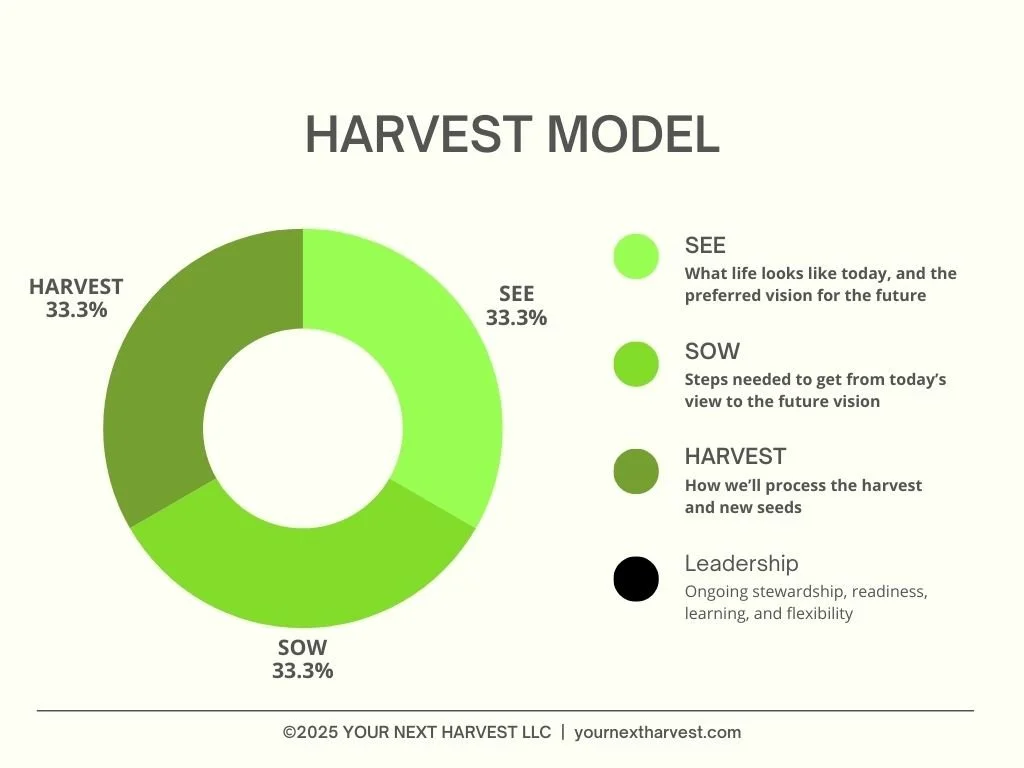
Strategic plans can be simple, or many levels deep with assessments, research studies, and analysis to inform seeing, sowing, and harvest. The key is to include all three essential parts in your written roadmap.
Seeing — a vision for the future with a defined timeline
Sowing — the action steps required to achieve the vision
Harvest — success defined, measured, reinvested, and celebrated
Establish a checkin schedule — at least quarterly — to monitor progress and make adjustments as necessary for flexibility and organizational resilience when new learnings require change.
Starting each new fiscal year with a new strategic plan, or adjusted multi-year plan, sets the stage for follow through and progress toward the year’s goals.